How Much Should You Spend on an Engagement Ring in 2026?
The three-months-salary rule was an advertising slogan, not advice. Here is what people actually spend, what drives the price, and how to get the ring you want at the number you choose.
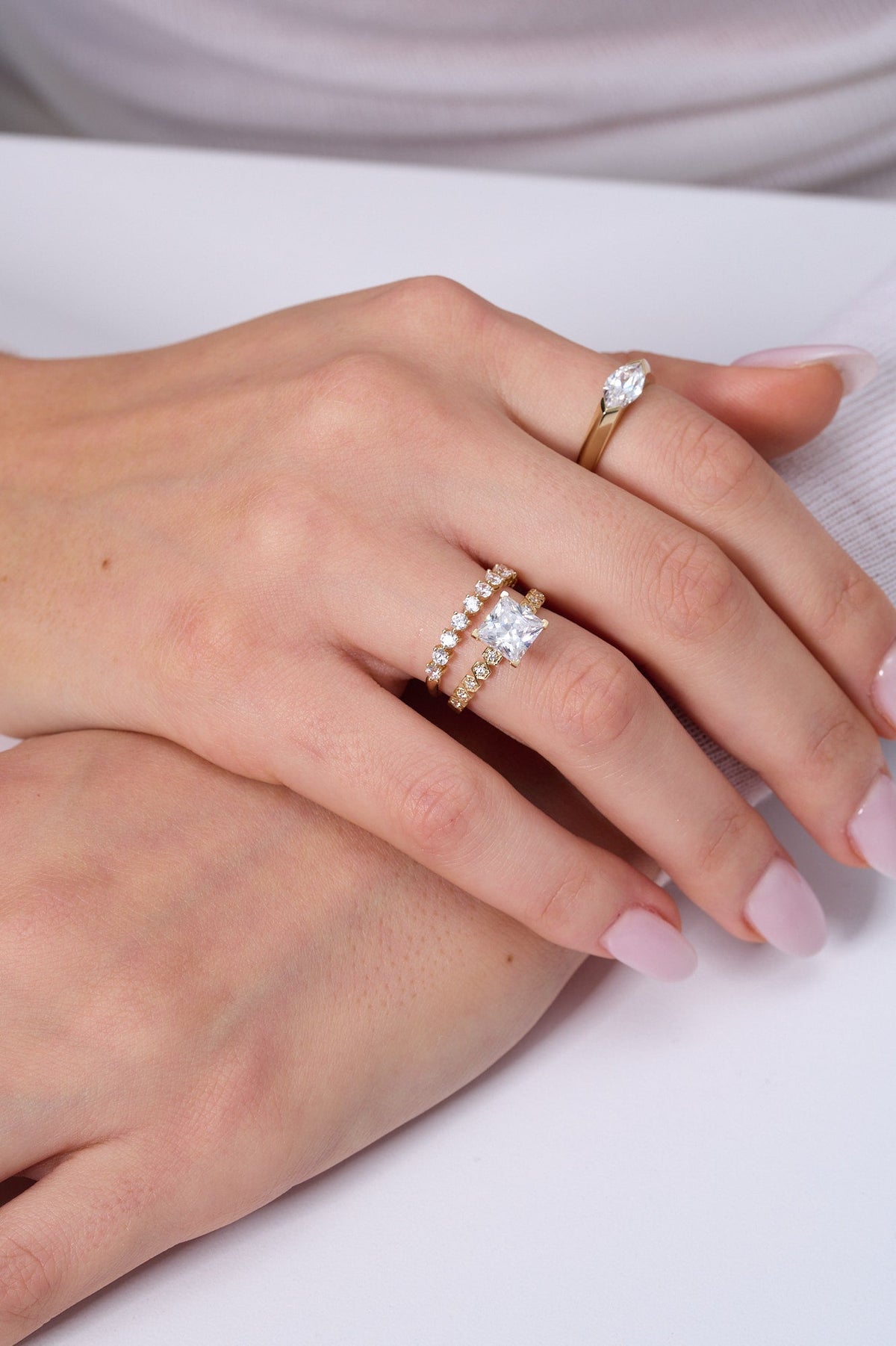
Few people ask this question aloud, so we will answer it plainly. There is no correct amount to spend on an engagement ring. The often-quoted rule of three months' salary was written by an advertising agency in the 1930s to sell more diamonds; it is neither a tradition nor guidance.
What people actually spend
Across our own orders, most complete engagement rings fall between $1,500 and $4,000. Some clients spend $800; some spend $15,000. The spread has far more to do with carat weight and shape than with anyone's income, and the people at both ends are equally pleased with what they chose.
The four things that move the price
Carat weight is the single largest factor, and the price does not rise in a straight line. A two-carat stone costs considerably more than twice a one-carat stone, because larger rough is rarer. Choosing 1.90 carats rather than 2.00 saves real money and is invisible on the hand.
Shape matters more than most people expect. Round brilliants command a premium because more rough is lost in cutting them. An oval, pear or emerald cut of the same weight typically costs 15 to 30 percent less and often appears larger, because the stone is spread across a longer outline.
Color and clarity are where we hold a firm view. We set VVS and better as standard. At that level a diamond is clean under magnification as well as to the eye, and it stays that way; there is nothing to find later. In white gold or platinum, a colorless grade of D to F keeps the stone as bright as the metal beside it. If you would like to compare grades side by side, our gemologists will show you on a video call.
The setting is usually the smallest line on the invoice. A classic solitaire setting begins around $600; pavé and hidden halo settings run higher because they carry additional stones and more labor.
Where lab-grown changes the arithmetic
A lab-grown diamond is chemically, physically and optically identical to a mined one. The difference is origin, and price. At the same specification you are generally looking at a fraction of the mined equivalent, which is why our clients routinely choose a larger, finer stone than they had budgeted for, and still spend less than they expected.
A practical way to set your number
Decide what you are comfortable spending before you look at a single ring, and tell us that number. It is not awkward, and it does not change how we look after you. We will send three diamonds that fit it, with prices, and you will see precisely what your budget buys. If nothing in that range excites you, we will say so, rather than quietly showing you something more expensive.
The ring she wears every day matters. The number on the receipt stops mattering the moment it is on her hand.
Have a number in mind? Tell our gemologist and we will send three options within two business days, with our compliments.


