The 4Cs of Diamonds, Explained Simply (and Where to Spend)
Cut matters most, clarity matters least, and carat moves the price. A plain-English guide to the 4Cs, with what to spend on and what to skip — for lab-grown and mined diamonds alike.
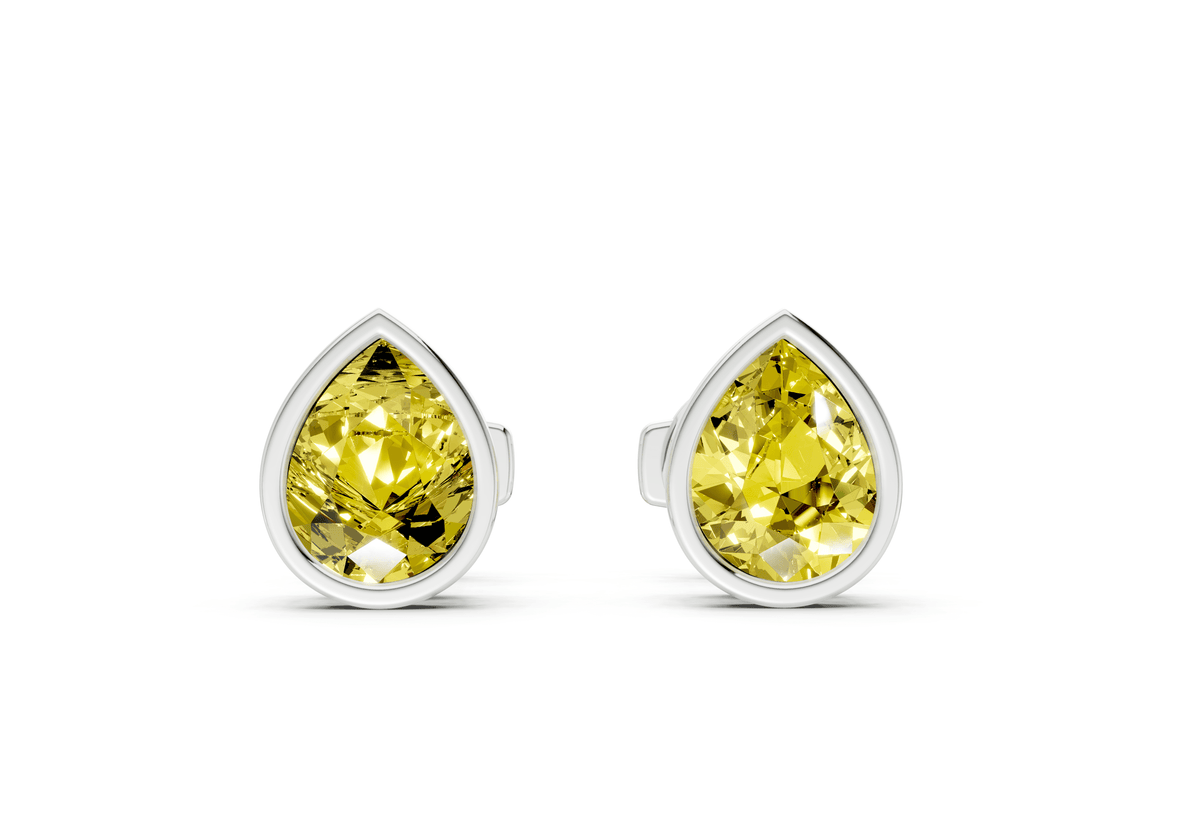
The short answer: of the four Cs, cut has by far the greatest effect on how a diamond looks, and carat weight moves the price most. Color and clarity decide how clean and bright the stone will remain for a lifetime, and they are where we hold the highest standard.
What are the 4Cs of a diamond?
Cut, color, clarity and carat weight. They are the four measures on every IGI and GIA grading report, and together they describe the stone. They apply identically to lab-grown and mined diamonds, because the two are chemically and optically the same material.
Cut: the one you see first
Cut is not the shape. It is how well the stone's proportions, symmetry and polish return light to your eye. A poorly cut diamond leaks light from the bottom and looks dull whatever its other grades; a well-cut stone comes alive in any light. Grades run Ideal, Excellent, Very Good, Good, Fair and Poor. Every diamond we set is Ideal cut.
Color: how colorless the stone is
Graded D through Z, where D is perfectly colorless and visible warmth begins around J. We work in the colorless range, D to F, as standard. In white gold or platinum there is no warm metal beside the stone to soften it, and a colorless diamond stays as bright as the setting. In yellow or rose gold, the same grade gives the stone a clean, white heart against the warmth of the metal.
Clarity: what is inside the stone
Graded from Flawless down through IF, VVS1, VVS2, VS1, VS2, SI1, SI2 and I1 to I3, according to what a grader can see at ten-times magnification. We set VVS and better as standard. At that level a diamond is clean under the loupe as well as to the eye, and it stays that way; there is nothing to find later, nothing to explain to an appraiser, and nothing to compromise the way the stone takes light. Step cuts such as emerald and asscher, whose long open facets act like windows into the stone, benefit from this most of all.
Carat: weight, not size
One carat is 0.2 grams. It measures weight rather than dimensions, which is why two one-carat diamonds of different shapes look different on the finger: an oval spreads its weight along a longer outline than a round and reads as the larger stone. Price does not rise smoothly with carat; it steps up at the round numbers, because demand gathers there. A 1.90 carat stone can cost meaningfully less than a 2.00 carat, and no one will see the difference of a few tenths of a millimeter.
How we would guide you
- Cut — Ideal, always.
- Color and clarity — D to F, VVS and better. This is the standard we set and the standard we recommend.
- Carat — with the quality settled, choose the size that suits her hand and your budget. Just under a round number is often the wisest place to be.
Do the 4Cs work the same for lab-grown diamonds?
Yes. Lab-grown diamonds are graded on identical scales by the same laboratories. A 2 carat E VVS2 lab-grown diamond is an E VVS2 in exactly the way a mined one is. The difference is origin and price, not quality.
Is a certificate necessary?
For any stone over half a carat, yes. A report from IGI or GIA is independent confirmation of all four grades. Every diamond we sell above 0.5 carats comes with its report, and every order includes an appraisal prepared for your insurer.
Would you rather we did this with you? Tell our gemologist your budget and what matters most, and we will send three diamonds with pricing within two business days, with our compliments. Get in touch.


