Diamond Stud Size Guide: What 1, 2 and 3 Carats Really Look Like
Carat weight on studs is quoted for the pair, not each ear. A size-by-size table in millimetres, what each reads like on the lobe, and which quality grades are worth paying for.
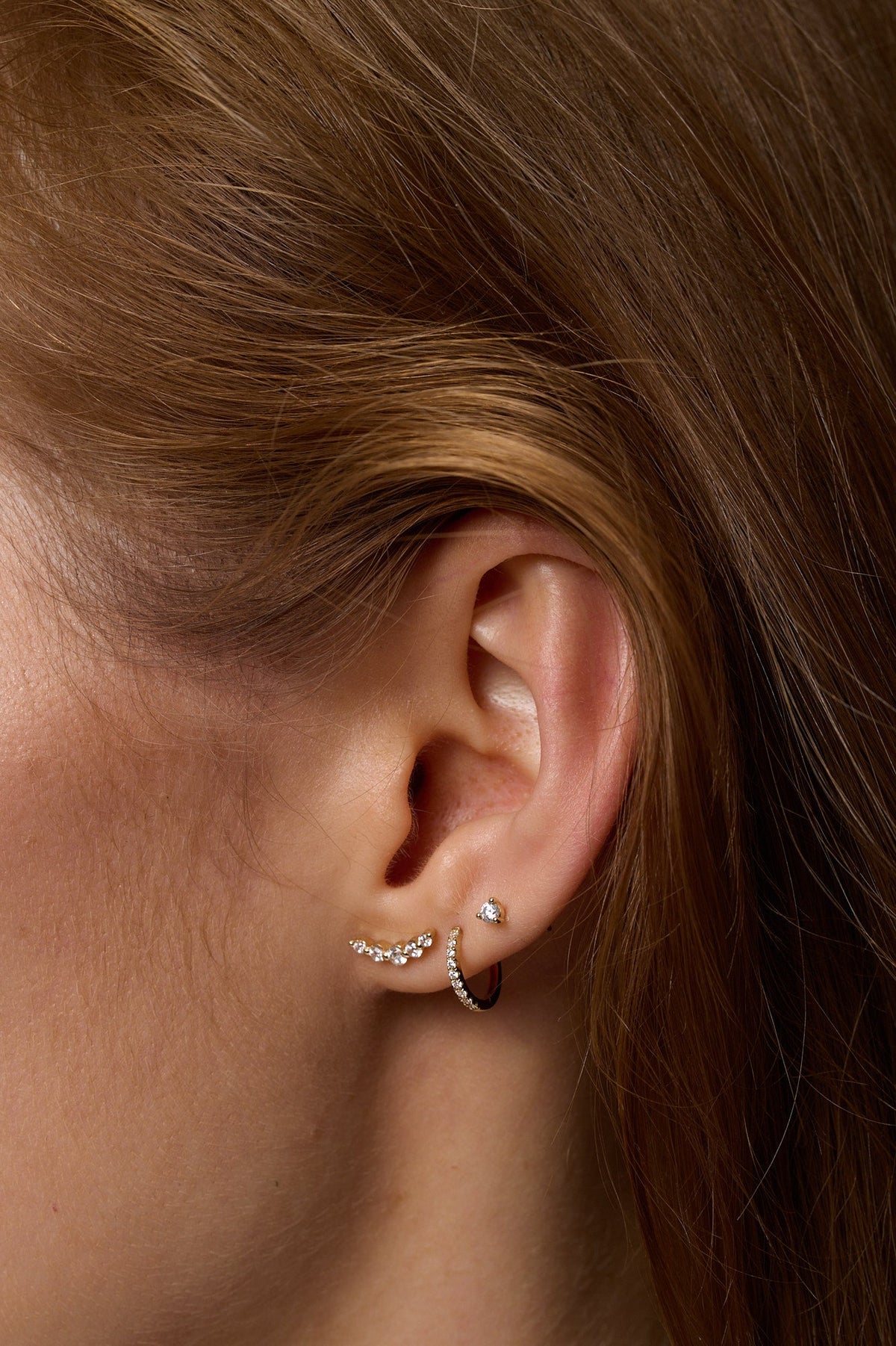
The short answer: carat weight on stud earrings is quoted for the pair, not for each ear. A 1 ct tw pair is two half-carat diamonds, each about 5.15 mm across. Most people choose 1 to 2 ct tw for everyday wear, and 2 ct tw is the size we sell most.
Is stud carat weight per ear or per pair?
Per pair, always, written as "ct tw" for carat total weight. If a listing says 2 ct tw, each ear holds a 1 ct diamond. Some sellers quote per stone to make earrings appear larger for the price, so it is worth checking the abbreviation before comparing.
How large is each size on the ear?
| Total weight | Each stone | Diameter | How it reads |
|---|---|---|---|
| ½ ct tw | ¼ ct | 4.0 mm | Barely there; ideal for a second piercing |
| 1 ct tw | ½ ct | 5.15 mm | Everyday and understated |
| 1½ ct tw | ¾ ct | 5.75 mm | Noticeable, still quiet |
| 2 ct tw | 1 ct | 6.4 mm | The classic, and our most chosen |
| 3 ct tw | 1½ ct | 7.4 mm | Clearly visible across a room |
| 4 ct tw | 2 ct | 8.2 mm | A statement |
| 5 ct tw | 2½ ct | 8.75 mm | Fills the lobe |
Which size should I choose?
For a first pair worn daily, 1 to 2 ct tw. For a gift meant to be noticed, 2 to 3 ct tw. For a second or third piercing, ½ to 1 ct tw, so it sits behind the main stud without competing. Above roughly 3 ct tw the weight begins to pull on the lobe, and a screw back or guardian back becomes worth having rather than optional.
Does the size of the earlobe matter?
It does. A small lobe carries up to roughly 2 ct tw comfortably; beyond that the stone may tilt forward. If the piercing sits low, or has stretched over the years, a lighter stone or a Florence martini setting, which sits closer to the ear, wears better than a tall basket.
Which setting should I choose?
All three of our round stud settings come in every size, in both diamond grades. The Geneva 4-prong basket is the classic. The Florence 3-prong martini sits closest to the ear and shows the most diamond. The Vienna 6-prong crown gives the most secure grip with six points of contact.
What quality should the diamonds be?
We set VVS and better as standard, in two grades: E VVS2 and D VVS1. At that level a diamond is clean under magnification as well as to the eye, and it stays that way; there is nothing to find later. Cut matters most on the ear, because studs are seen in motion and from a distance, and every pair we make is Ideal cut. In white gold or platinum we recommend a colorless grade, D to F, as there is no warm metal beside the stone to soften it. Every pair is matched so that both stones read exactly alike. If you would like to compare grades side by side, our gemologists will show you on a video call.
How much do lab-grown diamond studs cost?
At current pricing, in 14K gold with E VVS2 diamonds, a ½ ct tw pair begins around $250, a 1 ct tw pair around $450, and a 2 ct tw pair around $700. Because lab-grown pricing does not climb as steeply with size as mined, many clients choose a size larger than they first planned.
Undecided between two sizes? Our Geneva and Florence stud pages include a video comparing every size on the same hand. Start with the 2 carat Geneva studs, or read our guide to choosing earring backs.


